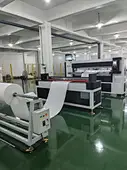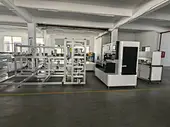


Water Filter Knife Pleating Machine
JSMRCZ-700-II
Quantity:
1.Introduction
A water filter knife pleating machine is a specialized industrial machine used to manufacture pleated water filter cartridges. These cartridges are essential components in water filtration systems, designed to remove impurities, sediments, and particles from water. The machine automates the process of pleating filter media, typically a synthetic or cellulose-based fabric, using blades or knives to create precise, uniform pleats, which significantly increases the surface area available for filtration, thereby improving efficiency.
2.Parameter
Max Width | 700mm |
Pleating Height Range | 3-60 mm |
Product Speed: | 380pleasts/min |
Power Supply: | 380V/60HZ |
Main Power | 9kw |
Working Air Pressure | 0.6Mpa |
M/C Weight | 680kg |
3.Key Components and Features:
• Knife Pleating Unit: Uses blades to fold filter media uniformly.
• Feeding System: Feeds the filter media into the machine.
• Pleating Drum or Roller: Supports the filter media during pleating.
• Tension Control: Ensures consistent pleat size and tension.
• Cutting Unit: Cuts the pleated media to the required lengths.
• Control Panel: Allows adjustments to pleat size, speed, and other parameters.
• Pre-slitting machine: Adjusts cutting dimensions via frequency converter speed regulation and cylinder blades.
• Marking machine: Marks in different pleat sizes with adjustable marking distances set via a computer screen.
• Cylinder pressing device: Equipped at the discharge section to ensure better and smoother pleating and pinching.
• Monitoring system: Monitors pleat flatness online before and after pleating.
• Knife Pleating Unit: Uses blades to fold filter media uniformly.
• Feeding System: Feeds the filter media into the machine.
• Pleating Drum or Roller: Supports the filter media during pleating.
• Tension Control: Ensures consistent pleat size and tension.
• Cutting Unit: Cuts the pleated media to the required lengths.
• Control Panel: Allows adjustments to pleat size, speed, and other parameters.
• Pre-slitting machine: Adjusts cutting dimensions via frequency converter speed regulation and cylinder blades.
• Marking machine: Marks in different pleat sizes with adjustable marking distances set via a computer screen.
• Cylinder pressing device: Equipped at the discharge section to ensure better and smoother pleating and pinching.
• Monitoring system: Monitors pleat flatness online before and after pleating.
4.Applications:
Residential water filters
Industrial water treatment
Food & beverage filtration
Pharmaceutical filtration
Automotive filters (air and oil filtration)
HVAC systems (indoor air quality)
Industrial filtration (process and water filtration)
5. Types of Pleating Machines:
Knife Pleating Machine (Blade Pleating Machine): Creates uniform and consistent pleats using advanced blade technology. Suitable for various filter materials like paper and non-woven fabrics. Can produce M-type and W-type filter media by adjusting the knife depth. Often used for liquid treatment filters.
Rotary Pleating Machine: Uses a rotating drum and blades or dies to fold material into consistent pleats. Known for speed and precision, and is commonly used in automotive and industrial filter manufacturing with cellulose media. Often used for air filters.
Servo-Type Pleaters: Can pleat at varying heights and support different material thicknesses at high speeds, creating pleat types like marker pleats, taper pleats, step pleats and"W"pleats.
Mini-Pleat Machines: Used to provide spacing between media pleats using hot-melt adhesive, commonly used for HEPA and ULPA filters.
6. Key Considerations:
Material Compatibility: Machines can handle non-woven fabrics, polypropylene, wire mesh, paper, and synthetic materials.
Pleat Height and Spacing: Adjustable settings allow customization based on filter specifications. [1][2]
Speed and Automation: High-speed operation is crucial for meeting high demand, with options ranging from manual to fully automatic machines.
Control Systems: User-friendly interfaces with digital controls simplify operation and monitoring.
Residential water filters
Industrial water treatment
Food & beverage filtration
Pharmaceutical filtration
Automotive filters (air and oil filtration)
HVAC systems (indoor air quality)
Industrial filtration (process and water filtration)
5. Types of Pleating Machines:
Knife Pleating Machine (Blade Pleating Machine): Creates uniform and consistent pleats using advanced blade technology. Suitable for various filter materials like paper and non-woven fabrics. Can produce M-type and W-type filter media by adjusting the knife depth. Often used for liquid treatment filters.
Rotary Pleating Machine: Uses a rotating drum and blades or dies to fold material into consistent pleats. Known for speed and precision, and is commonly used in automotive and industrial filter manufacturing with cellulose media. Often used for air filters.
Servo-Type Pleaters: Can pleat at varying heights and support different material thicknesses at high speeds, creating pleat types like marker pleats, taper pleats, step pleats and"W"pleats.
Mini-Pleat Machines: Used to provide spacing between media pleats using hot-melt adhesive, commonly used for HEPA and ULPA filters.
6. Key Considerations:
Material Compatibility: Machines can handle non-woven fabrics, polypropylene, wire mesh, paper, and synthetic materials.
Pleat Height and Spacing: Adjustable settings allow customization based on filter specifications. [1][2]
Speed and Automation: High-speed operation is crucial for meeting high demand, with options ranging from manual to fully automatic machines.
Control Systems: User-friendly interfaces with digital controls simplify operation and monitoring.