

Oil Filter Invert Seaming Machine
Oil Filter Invert Seaming Machine
Quantity:
Full-auto Spin-on Oil Filter Seaming Machine , Invert Seaming Machine
General Description
This equipment is mainly used for engineering machinery rotary type filter shell and the seal between the sealing plate.
General Description
This equipment is mainly used for engineering machinery rotary type filter shell and the seal between the sealing plate.
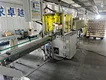
An Oil Filter Invert Seaming Machine is a specialized piece of equipment in the manufacturing of oil filters, primarily used to seam the components of oil filters in an inverted manner.
Specification
| Production capacity | 8 pieces / minute |
| Seal diameter | Ф80- Ф150mm |
| Sealing parts assembly height | 200-350mm |
| Suitable for steel plate thickness | 0.5~1.5mm |
| Motor total power | 3KW |
| Working pressure | 0.6MPa |
| power supply | 380V/50Hz |
| M/C weight | 500kg |
| M/C size | 900×800×2000mm(L×W×H) |
Working Principle
Inverted Feeding: The oil filter components, including the filter shell and end caps, are fed into the machine in an inverted position. This might be achieved through an automated conveyor system or manual loading into specific fixtures that hold them in the correct inverted orientation.
Seaming Operation: Driven by a power source, such as an electric motor, the seaming mechanism rotates and applies pressure. The seaming rollers or tools gradually deform and join the edges of the filter shell and end caps together, creating a tight and leak-proof seam. The specific seaming process may involve techniques like crimping or rolling to ensure a secure bond.
Quality Detection: Some advanced machines are equipped with sensors or vision systems to detect any defects or irregularities in the seaming process. For example, they can check for incomplete seams, uneven seaming, or any material protrusions that could affect the performance of the oil filter.
Structural Components
Inverted Feeding Unit: Comprises a conveyor belt, positioning fixtures, and a feeding mechanism. The conveyor belt transports the oil filter components to the seaming position, while the positioning fixtures hold the components in the inverted position accurately. The feeding mechanism controls the speed and rhythm of the feeding process to ensure smooth operation.
Seaming Unit: Consists of a seaming head, motor, transmission system, and seaming rollers. The seaming head is the core part, where the seaming rollers are installed. The motor provides power, and the transmission system converts the motor's power into the rotational and linear motion of the seaming head and rollers.
Control Unit: Usually uses a programmable logic controller (PLC) with a touch screen interface. Operators can set various parameters through the control panel, such as seaming speed, pressure, and the number of seaming cycles. The control unit coordinates the operation of each part of the machine to ensure the accuracy and stability of the seaming process.